Guided conversations about truth, reconciliation, and right relations — around kitchen tables, boardroom tables, and community spaces.
Table Talks is a guided learning resource that helps people gather in small groups to explore truth, reconciliation, colonization, Indigenous perspectives, and the responsibilities each of us carries in building more respectful relationships with Indigenous peoples, lands, waters, and communities.
Created through the work of kinSHIFT and IndigenEYEZ, Table Talks offers a series of guided conversation resources that hosts can follow with their group. Each gathering includes suggested host notes, conversation prompts, links to selected videos and stories, and reflection questions to help keep the conversation thoughtful, respectful, and on track.
You do not need to be an expert or professional facilitator to host a Table Talk. If you are willing to take the next step, gather with care, and learn alongside others, the resource is designed to support you. Table Talks is for everyday people who are curious, open, and ready to deepen their understanding in relationship with others.
Rather than a lecture, checklist, or formal training, Table Talks invites people to slow down, listen deeply, ask honest questions, and reflect together on what it means to live with greater responsibility, reciprocity, and care.
Many people want to support reconciliation but are not sure where to begin.
Table Talks creates an accessible way for people to begin — not by seeking perfect answers, but by making space for learning, humility, connection, and responsibility.
These conversations help people:
- ask honest questions
- listen deeply to different perspectives
- reflect on the impacts of colonization
- explore what reconciliation can look like in everyday life
- build trust and connection across difference
- identify small, meaningful actions they can take in their own communities
Reconciliation is not something that happens only in formal settings or through public statements. It is shaped through relationships, choices, conversations, and actions — including the ones that begin around a table.
Table Talks is designed as a pathway for people who are ready to learn, gather, and act in community. Participants may begin by attending or hosting an introductory session, then choose a next step that fits their context. This could include hosting a small Table Talk with friends, neighbours, or community members; organizing a local ReconciliACTION activity; or continuing into a longer guided learning series where available.
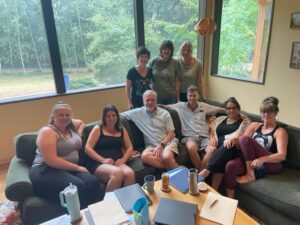
Table Talks works best with a small group of people who are willing to gather with intention, learn together, and stay open to reflection.
A host begins by inviting a few people into the conversation. This could be friends, neighbours, family members, or people connected through community work. The group then uses the Table Talks resource to guide each gathering.
The materials help shape the flow of the conversation, offering host notes, conversation prompts, selected videos and stories, and reflection questions that support learning and dialogue.
A Table Talk gathering might include:
- opening the conversation with care and intention
- sharing a meal or refreshments
- watching or reading a selected story or teaching
- reflecting together using guided questions
- listening to different perspectives
- identifying what participants are learning
- considering small actions or next steps
- planning a ReconciliACTION that helps move learning into practice
Community members may be eligible to apply for a small grant to support a local Table Talk gathering or reconciliation-based activity. These grants are intended for neighbourhood groups, friends, families, and community circles who want to continue learning together in a respectful and relationship-centred way.
Table Talks is not about rushing toward easy answers. It is about creating space for honest conversation, shared learning, and continued movement toward responsibility, reciprocity, and right relations.
The focus is not on becoming an expert. The focus is on learning how to gather with care, create space for honest conversation, and support one another in building right relations.
Table Talks ReconciliACTION Grants are available for up to $500 and are intended for individuals or small groups of up to six people.
These grants support people who want to gather with intention, use Table Talks as a learning resource, and take meaningful steps toward reconciliation, responsibility, reciprocity, and right relations.
Eligible applicants may include:
- individuals
- friends, neighbours, or family members
- small community circles
- small peer-learning groups connected through community work
The grant stream is designed for community-based learning and relationship-building. It is not intended for formal organizational training, staff professional development, consulting, or large public events.
Your gathering may be simple and shaped by your group. You might host a shared meal and conversation, creative reflection, land-based learning activity, discussion circle, or another idea that helps people learn together and move toward right relations.
Groups may choose to access the Table Talks toolkit as part of their learning. The toolkit is available for $350, and these dollars go directly to IndigenEYEZ to support Indigenous-led leadership programs.
If your group chooses to use the Table Talks toolkit, $350 of the grant will support access to the toolkit, with up to $150 remaining to help cover simple gathering costs.
Remaining funds may help cover costs such as:
- food or refreshments
- printed materials
- creative supplies
- accessibility supports
- small honorariums or thank-you gifts, where appropriate
- other small costs that help people gather and learn together
You do not need to have the whole journey mapped out before applying. Begin with curiosity, care, and a few people willing to sit together in honest conversation.
Application Process
To begin your application, click the “Apply Here” link below. The link will be active during the application period (June 26 through August 28). Clicking the link will open a new window where you can sign in to our online application system.
If you have applied to for an individual grant before (i.e. Neighbourhood Small Grants), you will already have your e-mail address and password registered in our system. Please log on using those credentials. If you don’t remember your existing log on information, please click the “Forgot Your Password?” link.
If you have not applied for a grant before, click on the “Create new Account” link and follow the instructions.
Important Note: our application software is optimized for organizations, and that means there are some workarounds for an individual applicant. When you reach the Organization Information section of the “Create New Account” page, ensure you do the following:
- Fill in only the starred (*) fields
- Organization Name: please use your family (last) name
- CRA Registration Number: enter 000000000RR0000 (9 zeros, RR, 4 zeros)
- Address: please use the address of your permanent residence
- Telephone: please use the number where you are most easily reached
Once you have created and or/signed into your account, you can start your application by clicking the “Application – Table Talks” link on your Applicant Dashboard. You can access your application at anytime prior to final submission by logging in with your username and password.
Table Talks can happen in many places, including workplaces, boardrooms, staff teams, volunteer groups, and community organizations.
Several organizations have already taken part in Table Talks as a way to begin or deepen conversations about truth, reconciliation, and right relations. These conversations can be a meaningful starting place for teams who want to learn together, reflect on their responsibilities, and consider how reconciliation shows up in their work and relationships.
The community-based grant stream is designed to support grassroots gatherings, peer learning, and small groups who are learning together in a relational way. It is not intended to replace organizational training, consulting, or deeper reconciliation work within institutions.
Organizations that are ready for a more structured learning process, staff engagement, board development, or organization-wide reconciliation work are encouraged to connect directly with kinSHIFTto explore the pathway that best fits their needs.
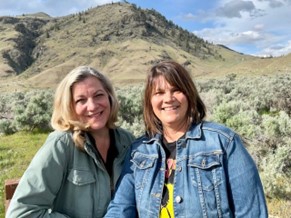
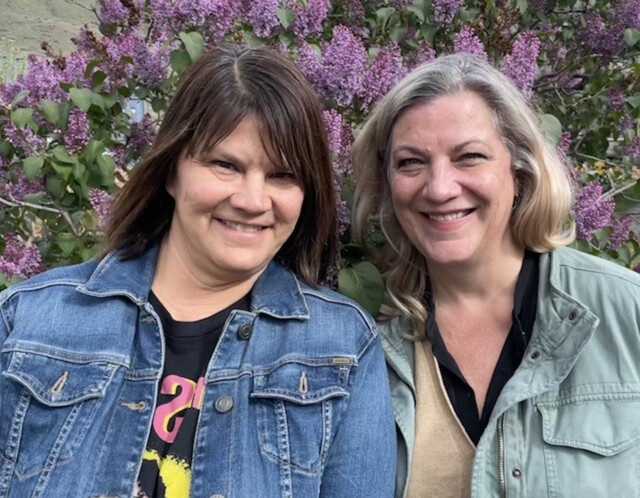
The introduction of Table Talks in the South Okanagan Similkameen grew from conversations between Kim English of the Community Foundation of the South Okanagan Similkameen and Kelly Terbasket, syilx Okanagan director of IndigenEYEZ.
IndigenEYEZ is an Okanagan-based initiative that delivers creative empowerment and land-based learning programs rooted in Indigenous knowledge, creativity, and community leadership.
Kelly often speaks about the syilx concept of pa’x — the understanding that when people come together with openness and respect, something meaningful can emerge.
“Indigenous people have so much to offer. We are the roots of this country and need to be treated as such. In syilx culture we have this powerful concept of pa’x, which speaks to the way that coming together as people can spark understanding.”
Table Talks builds on this idea by creating space for conversations that spark understanding, deepen relationships, and help light the path forward.
Table Talks is supported by the Community Foundation of the South Okanagan Similkameen, Vancouver Foundation’s Right Relations Fund, the Neighbourhood Small Grants program, kinSHIFT, and IndigenEYEZ.
For inquiries, please contact Kim English, Regional Manager, Community Relationships & Neighbourhood Small Grants, at kimenglish@cfso.net.